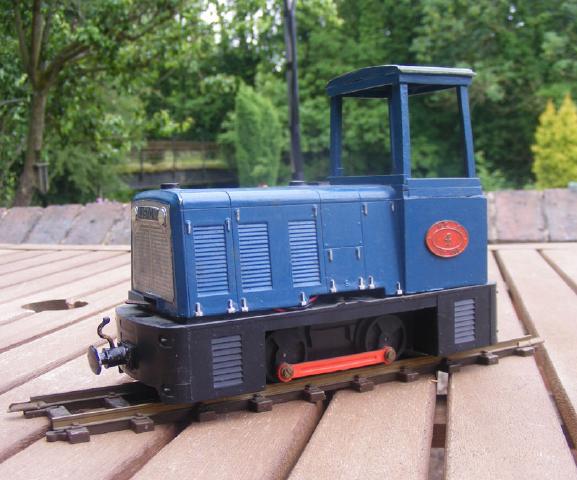
Eventually the motor gave out and it was re-motored, but that packed up and it got put to one side and gathered dust in the workshop. With the recent upsurge in interest in these locos, I decided to revive it. I'd obtained a replacement base for it, so fitted a switched battery box, wired up to one of the original switches. after a little persuasion (and a fair amount of wiggling of the switch) the loco reluctantly burst into life. One of the original couplings had broken, so both were removed and a pair of IP centre buffers which happened to be lying around were added. It trundles happily around Flagg Fluorspar and the switch JUST clears all the tight clearance points, so I won't have the embarrassment of a train suddenly reversing direction unexpectedly.
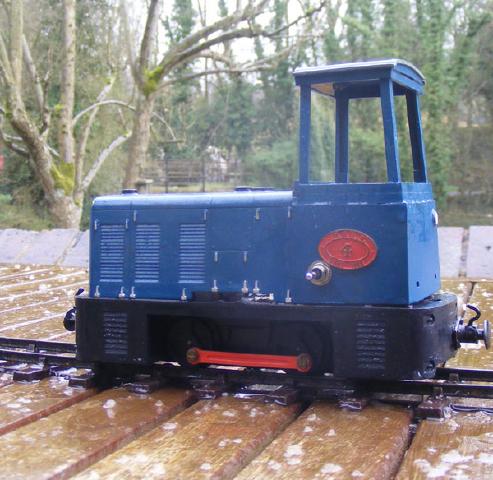
No 4 would have been pressed into service at the G Scale Show at Stafford in last weekend, but steadfastly refused to run. Upon returning home (and after a fair amount of fiddling and testing with the MDLR's 1950s-vintage multi-meter) the problem was traced to the switch - current was going in OK, but wasn't reaching the contacts where the long arm completed the circuit. At this point I admitted defeat and installed a double-pole centre off switch to control it, as seen above.

This was fitted to the cab wall, necessitating the drilling of a hole in the body and the grinding off of various mouldings which protruded from the cab floor. Originally, the intention was to mount the switch on its side, sticking out of the body where the original switch did and holes were cut for this, but I couldn't fix the switch down satisfactorily.

There's a bit of a mare's nest of wiring in the cab, but at least the beast works reliably.