A place for discussing battery-electric locomotives, whether they're diesel, steam or even electric outline
-
metalmuncher
- Cleaner

- Posts: 95
- Joined: Sat Oct 20, 2012 4:15 pm
Post
by metalmuncher » Fri Jul 19, 2013 6:58 pm
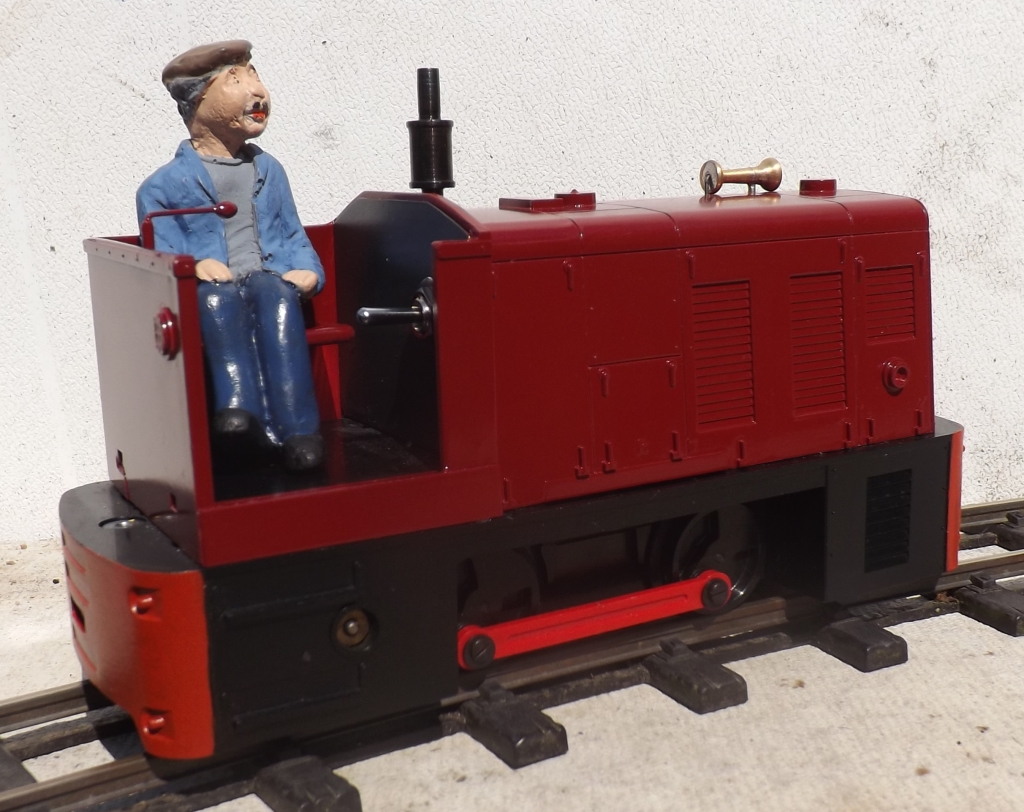
While we haven't got a line up and running yet, my dad has been working on a Big Big train Ruston, making it more suitable for SM32 use.


He did most of the work on this one, cutting the cab, adding seating and some detailing and repainting the loco. I added all the electronics, it has an inexpensive custom PWM speed controller based on an AVR Microcontroller and Darlington transistor, it works quite well but only after a little fiddling (you can see the cap added to the switch was an afterthought. ;) ) The speed is controlled by turning the exhaust and the direction by the switch in the cab. I'm, working on smaller, better and more feature rich controller designs for future locos.
-
WVLR
Post
by WVLR » Fri Jul 19, 2013 7:57 pm
Interesting project, which AVR micro controller are you using for the speed controller ?, I've done a similar thing using the ATmega328 and am in the process of designing a simpler one using the ATtiny13.
-
metalmuncher
- Cleaner
- Posts: 95
- Joined: Sat Oct 20, 2012 4:15 pm
Post
by metalmuncher » Fri Jul 19, 2013 8:20 pm
WVLR:86153 wrote:Interesting project, which AVR micro controller are you using for the speed controller ?, I've done a similar thing using the ATmega328 and am in the process of designing a simpler one using the ATtiny13.
I'm using the ATTiny25 in that controller, programmed with the Arduino IDE. I recently improved the code by writing it from scratch using only avr-libc, but I haven't reprogrammed that board yet. The Tiny13 is only a little less powerful than the 25, and really the 25 is way overkill. I've got some breakout boards for some ATTiny10 micros in a tiny SOT23-6 package on order, I should be able to get some prototypes on that tiny micro soon. Using those I should be able to get the board much smaller, there are 3 in the picture on a tape and that fleshy blob is my little finger.

-
WVLR
Post
by WVLR » Fri Jul 19, 2013 8:33 pm
I remember the days with sadness when I used to be able to solder those packages and the finer pitched ones without having to use a
magnifier, but I've got all the equipment for putting them on and taking the off again

I've not looked at the ATtiny10 yet, let me know how you get on with it.
I used the ATmega 328 on an Arduino Nano as I needed a lot of processing power for the project that I was working on, See :-
http://www.wvlr.co.uk/html/standish_hall1.html
-
metalmuncher
- Cleaner
- Posts: 95
- Joined: Sat Oct 20, 2012 4:15 pm
Post
by metalmuncher » Sat Jul 20, 2013 7:16 pm
I can remember taking a look at your Infrared Distance sensing loco, a very cool project indeed. The locos we have now however are not really big enough to fit a whole lot of electronics in though. I also like your data wagon, it's a great idea.
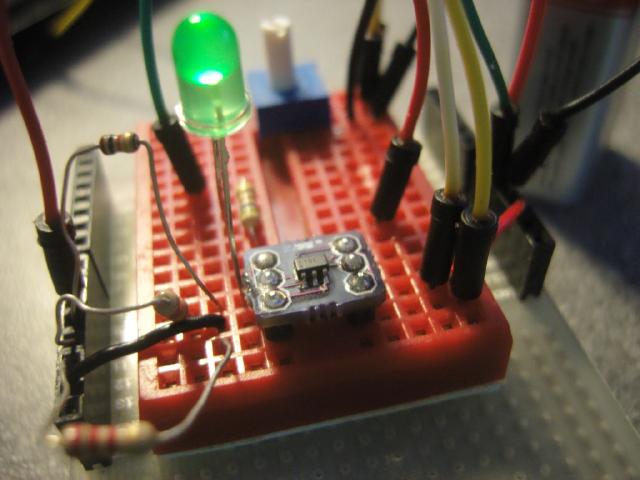
Today I got my SOT23 breakout boards and soldered the Tiny onto one so I could breadboard a prototype. Soldering went OK I think for my first SMT job, I did it with just a .5mm tip iron and no magnification - I am 16 so I'm quite glad that my eyes can do that and haven't started to deteriorate yet.
The PWM is working well and the code is super simple, coming in at just over 100 bytes, you could easily fit this on the ATTiny5 (Same chip, but 512bytes of program memory instead of 1k) but the price difference is so negligible you might as well stick to the 10.

-
WVLR
Post
by WVLR » Sat Jul 20, 2013 10:21 pm
Your soldering looks fine judging by the photo, a .5 mm tip on the iron is
OK for that size of job. I use .5mm solder with Cobar 390 flux and 80 watt RF heated iron as the tracks tend to drag a lot of heat away from the tip.
The data wagon was a last minute idea as a project for a job interview (I didn't get the job) The whole thing was designed and built in less than 2 weeks.
Who is online
Users browsing this forum: No registered users and 5 guests