Background is that we live in a house alongside a canal towpath. Our garden is long and narrow - with the towpath one long side. The towpath is about a couple of metres higher than our garden and the bank is held back by a wooden retaining wall about 0.7m high. The bank had become very scruffy and i realised that with some work i could build a railway along the bank which would put the line 0.7m above ground level. i could have an end to end line about 50m long.
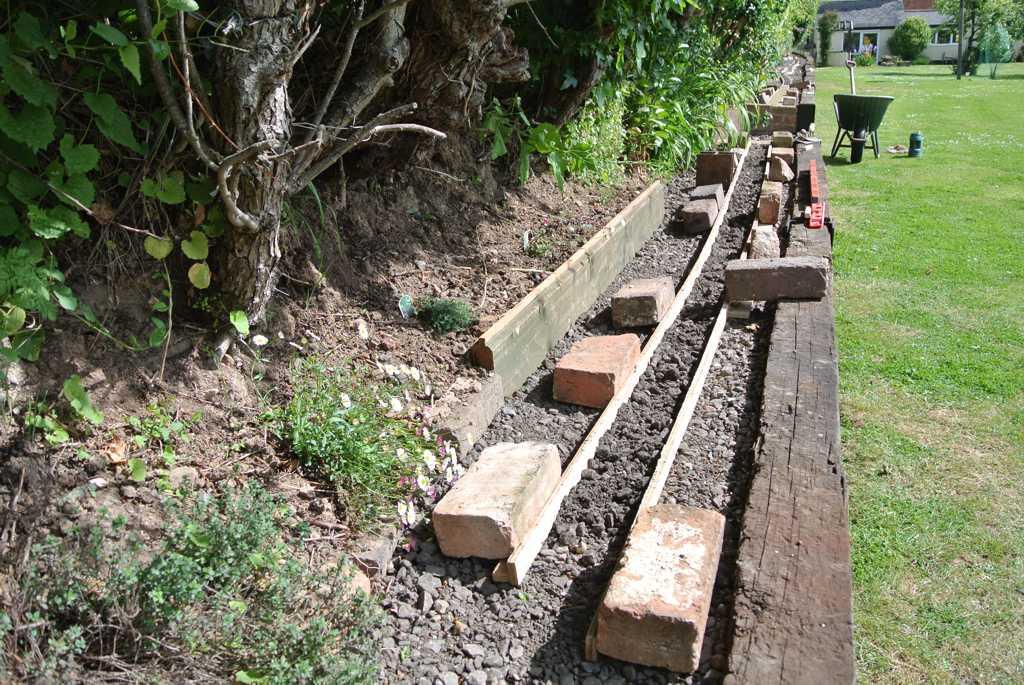
This picture shows the general situation with the green planking wall which would host the line.

We're now about January 2014. Next step was to clear the bank, remove material and replace with about 100mm of recycled railway ballast (V appropriate).
These next two pictures show the digging out and the ballast being laid. I had about 3 ton of ballast delivered - which i moved twice - so 6 tons moved to far. The garden looks scruffy in January!


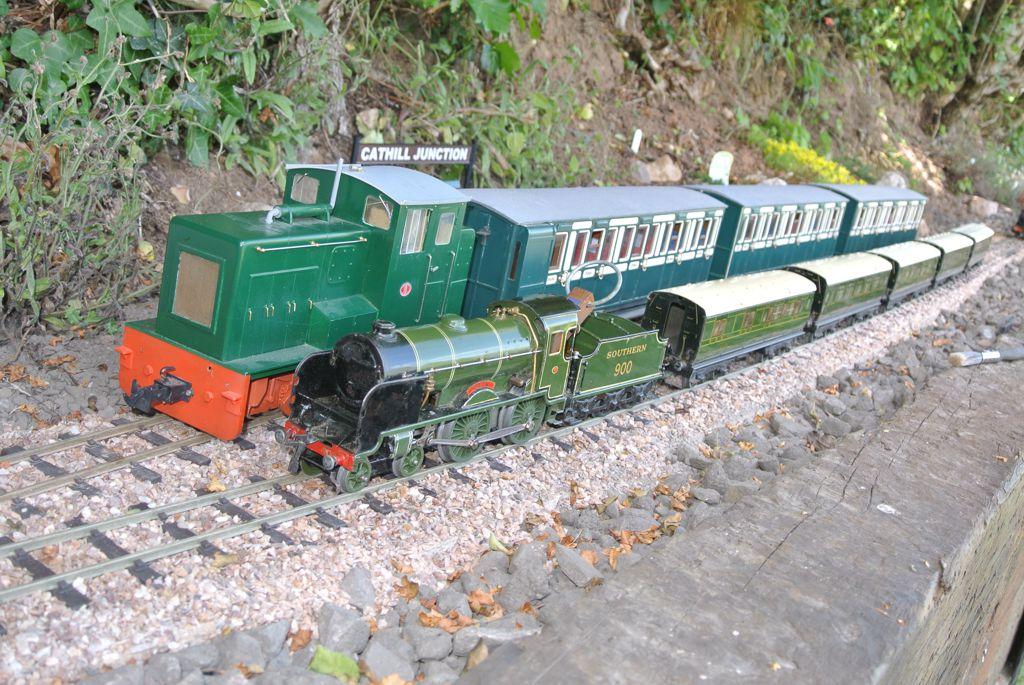
So far so good. I then laid a strip of concrete along the ballasgt about 30mm deep on which track was fixed with gripfill adhesive. And then i could begin to run trains along the first half of the line. Construction of the diesel and coach are on another thread of mine.


Garden looks more summery now.
Then came disaster. The wooden retaining wall decided that this was really too much and began to collapse into the garden. Our own mini version of Dawlish was starting. I imagine that the wooden posts were already rotting and the weight of 3 tons of ballast well tamped down was the final straw. This picture shows one of the bulges by the water tank.... All work halted pending a solution.

My first idea was to patch things up. Replace the rotten posts and carry on. But i soon realised that as soon as I replaced one section, another would then be next. So only the nuclear option remained. Take up all the track, replace the wall in its entirety and start again. I decided to do things properly and the new wall would we railway sleepers held up with RSJs. 54 sleepers and the RSJs were ordered from Pullham steels at Dorchester (highly recomended) and after a little bit of fussing, this is what i ended up with in my field:

Next - removing the old wall. Most (but not all!) pf the 3 tons of ballast was dug out and stored - about 2 tons. So 8 tons moved so far. Holes were dug and RSJs placed loosely in position. We had a sleeper moving party and got them placed near where they would end up.


To be continued below.