SapperAnt:95812 wrote:I've been drawing up some local buildings (based on brick counting) to 16mm scale/ 1:19 they're vast. Even the little LYR station grotty hut is mahoosive. And really bring home how small narrow gauge actually is.
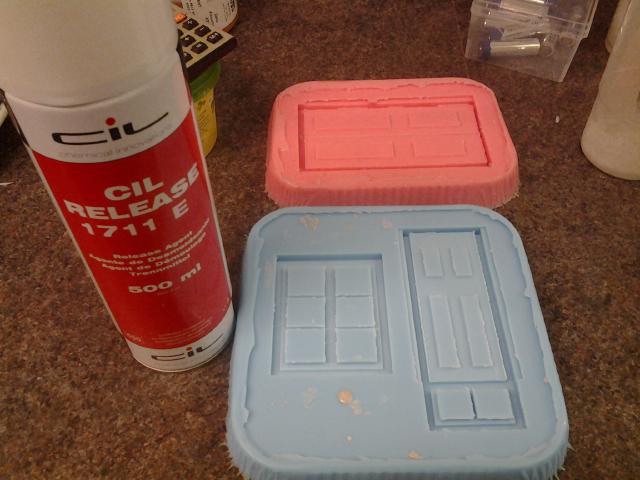
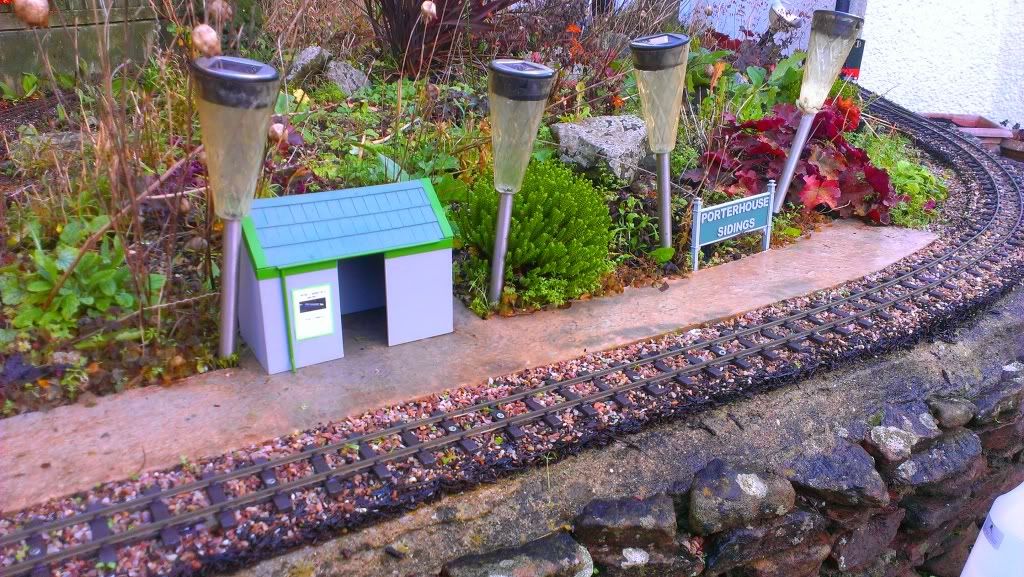
You know what? I think that's probably a good thing. Many of us are drawn to narrow gauge by the appeal of the smaller, human-scale kit- friendlier and less intimidating (as Peachbottom puts it). A train alone in the garden can sometimes lose that appeal because it's out of context, with nothing visible for comparison so it loses that sense of smallness. On the mantlepiece or on plain line through the rockery a VoR 2-6-2T is a large and impressive piece of kit. It's only when it's stabled opposite an ATW 158, NR 37 or looking slightly lost among the full-size buildings at Aberystwyth that you're reminded how small it really is in "big railway" terms. Anything that cuts our trains down to size and serves as a visual clue to their overall proportion is a good thing. Buildings large or small have a role to play in this, since doors and windows are people-sized and fairly standard (with exceptions). I would say that for best effect, close to the track a smaller building of the right scale is more useful than a same-size model of a larger building in a different scale. Further away from the track there's a lot more room for manoeuvre- even "forced perspective" if you're very lucky and rather clever.
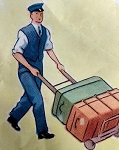
It's not just buildings either: Any familar object of known size can serve to provide an eyeball-reference for scale. Figures and human-scale objects like bicycles, suitcases, street furniture and the like, as could familiar railway equipment like standard gauge stock (on transporters, or off their wheels in retirement as sheds, shelters or whatever) or equipment like signals.*
*Yeah, signals. For me they can make or break scale effect. There were comparatively few narrow gauge railways, certainly not enough to justify manufacturers producing special signals for them, so the few lines that had them tended to buy off-the shelf kit straight from manufacturers' catalogues intended for SG lines. This means that signals appear very large in the narrow gauge world, the proportions look wrong with the arms too big (especially on short posts to be visible to drivers nearer to the ground) and the trains too small, but that's prototypical. If you freelance a signal so it "looks right" with the trains it's almost certainly wrong- but if it "looks wrong" it's more likely to be right- no wonder lots of modellers don't bother with them ;-)



 :oops: :oops: