Thomas Telford Locomotive - Take Two

A very popular starting point for Live Steam. With their low cost comes a number of problems which can be discussed here
Post Reply
User avatar
Chris Cairns
Driver
Driver
Posts: 2372
Joined: Mon Oct 29, 2007 7:25 pm
Location: Glasgow, Scotland

Post by Chris Cairns » Fri Feb 15, 2013 9:21 pm

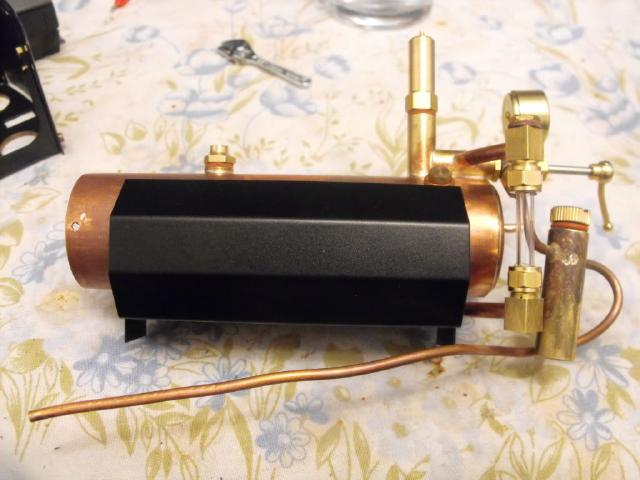
The original Mamod SL combustion chamber was tack/spot welded together, and slide onto the chassis frames and was held by 2 screws & nuts to the cab front. This is Doug's PPS Janet combustion chamber (the Janet has no cab front so it just slides on top of the chassis frames).

Image

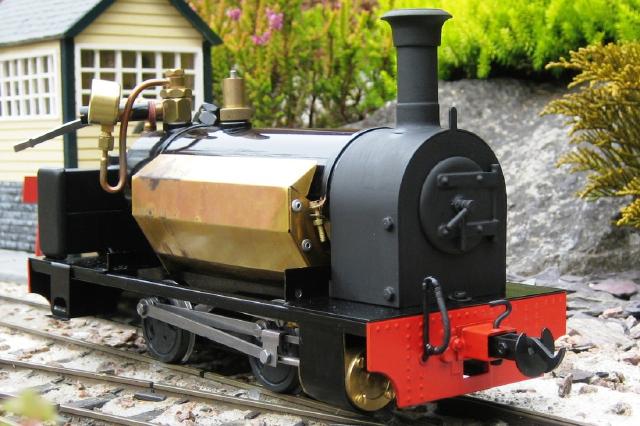
The Roundhouse combustion chamber is riveted together.

Image

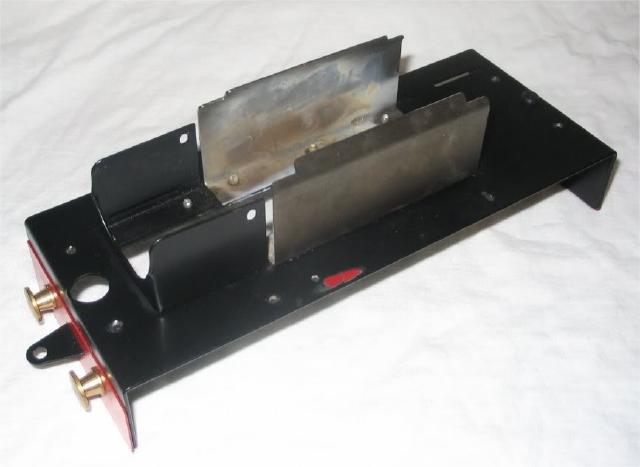
The Mamod William was a straight wall riveted to the chassis.

Image

What you can see is the old Mamod & Roundhouse use a thinner metal than the William one (my Mark II has a thinner metal than the William but it is still thicker than the old Mamod style). So that thicker metal riveted to the chassis is soaking up a fair bit of the heat output from the burner.

Chris Cairns.

mikewakefielduk@btinterne

Post by mikewakefielduk@btinterne » Fri Feb 15, 2013 10:04 pm

Thanks for those Chris, it makes it a lot clearer.

Looking at the William you can see the way combustion chamber is attached to the chassis its acting as a huge heat sink.

Just a few simple improvements might make all the difference, for example simple washers between the chassis and chamber wall where its riveted would create a small air gap and cut down the direct heat flow.


Mike

Spule 4

Post by Spule 4 » Sat Feb 16, 2013 1:36 pm

Also looks like very little, if any, wrap-around of the boiler.

<edit> The wrap around both helps keep heat in and the "draft". I think this, along with insulation between the frames and sheild, would be of benefit?

mikewakefielduk@btinterne

Post by mikewakefielduk@btinterne » Sat Feb 16, 2013 5:02 pm

Just noticed the Millie has its frames cut away either side of the combustion chamber heat shield. Presumably to further reduce the heat transfer to the chassis, air being a much poorer conductor than steel.

Can't see Mamod changing the frame, they'll already have made the first batch for the TT (economies of scale and all that). If they do go for a new combustion chamber it will have to fit whatever already exists.


Mike

User avatar
Chris Cairns
Driver
Driver
Posts: 2372
Joined: Mon Oct 29, 2007 7:25 pm
Location: Glasgow, Scotland

Post by Chris Cairns » Sat Feb 16, 2013 6:25 pm

Spule 4 wrote:Also looks like very little, if any, wrap-around of the boiler.
That is the case with the Golden Jubilee, William & William II. However on the Mark I, Mark II & Thomas Telford the side wall has been shaped semi-hexagonally. Sadly there are no good photos of a Mark I or II dismantled, but if you look closely at Lloyd's (steamie1) Mark II with the body work raised you can just see this shaped combustion chamber side wall.

Image

I've just been running my Mark II and I could touch the side tanks without being burnt - I cannot do that with my William II.

Not sure the purpose of drilling 4 holes into each Mark II combustion chamber side wall - surely that could draw in cold air thus reducing the heat over the boiler (if you look at Lloyd's photo above you can see his burner has come out through one of those holes).

Chris Cairns.

steamie1

Post by steamie1 » Sat Feb 16, 2013 7:55 pm

Chris the mark on the burner is only the match soot from lighting it. I too can handle the loco during running it is quite cool. I have run in in 40mph wind and the gas does blow around and need turning up but it is fine.

mikewakefielduk@btinterne

Post by mikewakefielduk@btinterne » Sat Feb 16, 2013 8:03 pm

I'm with you on that one Chris, those side holes serve no purpose other than to let heat out. You can light it through the slots where the chassis goes from vertical to horizontal.

But, if the Mk11 combustion chamber keeps the rest of the loco relatively cool it implies most of the heat is being transferred to the boiler. As Mamod have used the same combustion chamber design for the TT and its not getting hot enough, will a Millie style burner alone be enough to make a difference? Fingers crossed.


Mike

mikewakefielduk@btinterne

Post by mikewakefielduk@btinterne » Mon Feb 18, 2013 10:22 pm

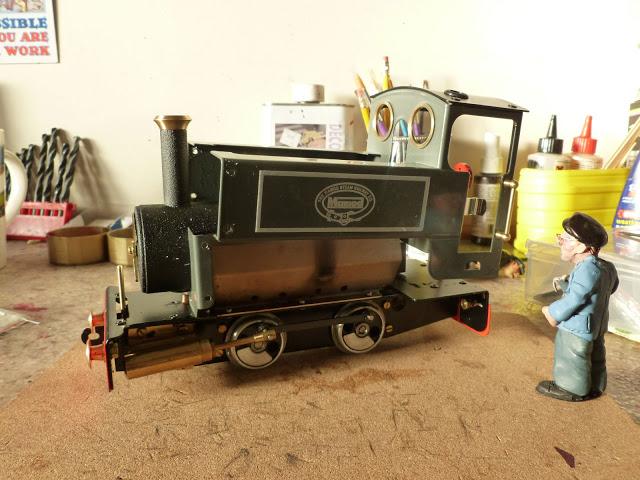
I decided to put my money where my mouth is and altered my Mk11 combustion chamber so there are washers lifting the chamber wall off the locos frame.

Fired it up today and all seems fine plus the frames seem cooler than last week (when I could touch the side tanks without gloves but found the front and back of the loco fairly uncomfortable to touch).

Image

Unfortunately this wasn't a scientific test and I doubt if such a simple change will be all the TT needs to overcome its problems., but at least it shows that you're right Chris, and a noticeable amount of the burner's heat is being conducted straight to the frames and therefore wasted.

Also finally found a picture of a Millie burner and its a simple brass tube, sealed at the far end, with a couple of rows of holes drilled in the top for the gas jet. Why this might be more effective than a ceramic burner I've no idea.

Mike

steamie1

Hate to throw a spanner in but all things are worth consider

Post by steamie1 » Tue Feb 19, 2013 12:02 am

The holes are to allow oxegen in so the gas is more stable with heat difference, from start to end. Heat will transfer but friction and oiling play a small part too later on in the run.( I ran mine with no oil and the temp, shot ,so I shut it down this was a test for speed increase due oil mix changing (seperate issue))
The burner on the Mk2 requires about half it's optimum effeciancy setting. In otherwords it has more than double its requirements. To double up the setting, is to overheat and wreck the gas air mix. Gas air is a linier curve till a point only. The holes are to set this gas air mix. I find a quarter of a turn enough, half too much beyond is to spoil the mix (too much gas) + it would do damamge at half and beyond anyway.
So if we have an effeciant burner for the boiler why change it for Telford ? I suspect any lack of steam is the lack of retention and lack of volume the two being related. The heat/ steam ratio becomes more heat later on, unless the boiler is enlarged. Adding a hotter burner is not Telfords need with this boiler. Also I'd stick my neck out and say Mk2 is just fine as is, having had 30 runs on it when run in parameters it can be lifted up by the side tanks. Ceramic wool added to the sides may help this too. If you want the Mk2 to be cool run it in well, use good oil, start from cold but with hot water, and set the gas low as you can for the work to be done.
Telfords problems must be HOW the steam is used and lost, only. Gulp! hope no one takes offence. I am open to suggestion and read with interest, deep respect to all.

mikewakefielduk@btinterne

Post by mikewakefielduk@btinterne » Tue Feb 19, 2013 8:42 am

I agree with you, the Mk11 is a fine loco as is. The reason I put the spacing washers between the heat shield and the frames was simply to demonstrate that if the TT doesn't have a hot enough burner (as Mamod are claiming) to maintain a head of steam they could retain more heat by reducing the amount lost by conduction to the frames by simply reducing the amount of direct contact between the chamber and frame. As I don't have a TT to experiment on, I used my Mk11 instead (and since doing the experiment and taking the picture have reverted it back to not having the spacing washer - if it ain't broke why fix it?)

However we're left with the issue of the TT. It was meant to be released for sale last summer and now, some 8 months on, they're still having problems. The main one being that under steam, but not compressed air, the loco starts to run fine and then, after a very small time, slows down and stops.

From what Peter Johnson at Mamod told me, they at first thought the problem was with binding O rings (because they couldn't quite get the exact size they needed and had already manufactured a large number of 11mm cylinders). He demonstrated this to me with a piston in its cylinder which you could hardly move in and out and another, after its O ring was given a very quick rub on very fine emery paper, now able to slide in and out easily.

There the matter stood throughout last Autumn, not much progress being made as I suspect Peter was tied up with developing other projects such as a new stationary engine.

Then, early this year, I was told the problem was not the O rings after all but thought to be the new 11mm diameter cylinders using more steam than the boiler could produce and they were looking at smaller, maybe 10mm diameter, cylinders.

Finally, as of the end of last week, they are now looking at trying a different burner based on the one in a Roundhouse Millie. Presumably 10mm diameter cylinders have now been tried and haven't made much improvement.

I personally doubt whether the Millie type burner will make a huge difference (although a simple brass tube with a couple of lines of holes for the flames might be cheaper to make than the existing ceramic one, and so be retained anyway).

One thing Peter also mentioned is the loco raced away on the track and had overbalanced on the curves so my view is you're right and the problem with the TT is how the steam is used and lost rather than how its made in the first place.

With the Peterborough Show only a couple of months away I anticipate Mamod will be now concentrating on getting things resolved asap.

steamie1

Post by steamie1 » Tue Feb 19, 2013 9:38 am

I'm in full understanding now Mike and should have been earlier. I think we sing from the same hymsheet basicly. As Chris says the William shoots off then runs out of puff. A bigger boiler enabling the gas to be turned up could do it. Slightly larger wheels different rod angles with timing may also help effeciancy.
On C.G. I have always added a little lead at the rear because the brass is all at the front. I add the weight below the axle. This with the steel wheels helps. On wheels I think it is a good upgrade as the tyres being angled not flat and flanges being sharper help roadholding.
I wish the market did not dictate to Mamod to go Slip eccentric. I would like to see them refine further the oscillator and perhaps offer different body shapes/ colours around the Mk2 Boiler etc.
The simple low cost fettling loco, is a niche market and one Mamod could totaly dominate world wide. Add sharp Steel wheels, go global and offer different shapes and styles.

User avatar
Chris Cairns
Driver
Driver
Posts: 2372
Joined: Mon Oct 29, 2007 7:25 pm
Location: Glasgow, Scotland

Post by Chris Cairns » Tue Feb 19, 2013 7:23 pm

Mamodevon wrote:I lost motivation recently what with my Jubilee version not performing at all well. Mine seemed to work fine on air and then on blokes but really did not go more than a few feet at a time on the test track.
This was Alan Dunster (who went on to start Dream Steam) talking about his Queens Golden Jubilee locomotive.
Unofficial Mamod Forums wrote:These engines are tricky to get running. They can be very tight to turn over once pressure builds up, even to the point where it feels like something will bend or break when turning the flywheel.
This was discussing the Mamod Centurion mobile engine which uses the same slide valve cylinder. It was decided that the problem was the steam condensing in the cylinder causing a hydraulic lock, but I wonder if that was the only problem.
Chris Cairns wrote:it starts off fine but after a small while begins to run very slowly - Almost exactly the same symptoms that I suffer whilst trying to run my William II and Brunel. On the Brunel I have to fill up the lubricator after it slows down to get it to run smoothly again. Still not solved the problem with the William II. I now wonder whether a lighter grade of oil may help.
Mamod wrote:The main one being that under steam, but not compressed air, the loco starts to run fine and then, after a very small time, slows down and stops. Peter also mentioned the loco raced away on the track and had overbalanced on the curves....
So we have a very recurring theme and they all have slide valve cylinders. Seems there is a sticking/friction problem with them which the current firing, steam volume producing and lubrication systems cannot cope with.

I did finally get my William to run for a complete boiler fill without stopping, but that was after lots of running in at high speed on blocks, and firing on a Butane/Propane gas. I've yet to try this gas on my William II but I understand that Mamod are using this mixed gas as well.

I do not think that the Roundhouse burner will produce a significantly higher heat, but am happy to be proved wrong. I do hope they get it sorted out soon as I've decided to visit the Peterborough show and it would be great to see the Thomas Telford performing well.

Chris Cairns.
mikewakefielduk@btinterne

Post by mikewakefielduk@btinterne » Wed Feb 20, 2013 5:21 pm

If all the slide valve engines have the issues then perhaps its something quite basic in their design. Ignoring the TT they all have cylinders with a 9.5mm bore diameter and a 14.0mm stroke. Other locos often seem to have longer stroke to bore ratio. I'm sure its a very complex subject but I was always of the understanding that a longer stroke to bore ratio gave better slow running while a shorter ratio gave more power.

With the TT Mamod have tried different diameter cylinders but presumably have left the stroke unchanged (as its dictated by where the crank is attached to the driving wheels), so by increasing the cylinder bore only they may be making the slow running worse.

Which of course does nothing to explain why your Brunel gives you problems Chris while mine runs really well, and always has done. As far as I can see there's no difference between the locos other than mine only has a single exhaust opening on the cylinder.

Mike

User avatar
Chris Cairns
Driver
Driver
Posts: 2372
Joined: Mon Oct 29, 2007 7:25 pm
Location: Glasgow, Scotland

Post by Chris Cairns » Wed Feb 20, 2013 6:38 pm

It is certainly an interesting problem Mike.

The Golden Jubilee & original William locos had a piston and rod which was machined out of one piece, and just oil rings on the piston. The later William II & Brunel have an 'O' ring piston and an 'O' ring piston rod gland.

However I do not think the slide valve or eccentric strapping has changed at all.

The mobile engines have the advantage of a large flywheel and a drive belt which connects the drive from the flywheel to the road wheel with the appropriate speed reduction. Similarly the Brunel has a flywheel and a 2 to 1 speed reduction (one day I may solve the problem of my poor running Brunel but it is currently very low priority).

I've just ran my William II again to use up my leaky cannister butane gas, and whilst it runs great on blocks it still struggles on the track. I do not know enough about the subject but could a change to the valve timing help as there is no current way of changing this like there is on other Manufacturer's locomotives?

Off to enjoy demonstrating Hornby OO Live Steam at Model Rail Scotland this weekend, then hopefully my eBay Mamod Saddle tank will arrive early next week.

Chris Cairns.

mikewakefielduk@btinterne

Post by mikewakefielduk@btinterne » Wed Feb 20, 2013 8:17 pm

Unfortunately I don't know much about valve timing either so, as I wasn't at work this afternoon I spent a while trying to read up on the subject. (Made me realise I should correct the terminology I've used previously and say Mamod's have piston valves and not slide valves (thank you Wikipedia!) to control the steam.)

I've come across quite a few live steam people expressing the view piston valves are more toy-like than D valves, but I think that's somewhat unfair as the valve design is used in full sized steam locos as well as models. The main disadvantage I've read about is they wear out in use whereas D valves actually wear in.

They're also probably cheaper and easier to make than D valves.

Yesterday I came across some Roundhouse literature explaining how adjust the slip eccentrics on their older Classic series of locos, but they weren't fitted with piston valves. I couldn't find any mention of adjustments you can make to Roundhouse Basic series of locos though, so maybe they're non-adjustable like Mamods.

Enjoy your new Mamod, Chris. Its oscillating cylinders will be totally trouble free.

steamie1

Could you let me know all about the running of the Saddle

Post by steamie1 » Wed Feb 20, 2013 10:48 pm

Chris do let us know how the Saddle Tank works and how it lets the heat out.. With anticipation, and thanks..

mikewakefielduk@btinterne

Thomas Telford Latest

Post by mikewakefielduk@btinterne » Mon Mar 04, 2013 2:05 pm

As I had to visit Birmingham this morning I called into Mamod and heard some good news at last:

The burner issue has been successfully resolved and I was shown a TT with a revised burner getting up to steam from cold in about two minutes whereas before it took about 4 minutes. Peter reckons the revised burner is about 100% better than the old one whereas the Millie burner was only about 60% better. Rather than duplicate the details I'll post them on the Ceramic Gas Burner thread.

The new combustion chamber is now raised off the frames and only touches in 2 locations per side where its attached. The four air holes (that you get in the sides of the Mk11 burner) will be closed off as the reworking has created a gap between the frame and chamber to let air in.

They'll be using cylinders with a 10mm internal diameter.

They intend to introduce the changes to the burner and the combustion chamber into their other models as well.

The only remaining problem they now have is the TT has a tendency to topple over going round the tight curves of a Mamod track. To get around this the side tanks will be reduced 3mm in width and other work will be done to the frames to bring the weight further inboard. There's also holes under the frame to allow for metal blocks to be attached in order to lower the centre of gravity.

Peter demonstrated a partly built loco with just a front spectacle plate (like Millie) and combustion chamber and this apparently runs on the Mamod track without tipping over. I suggested they might consider marketing it without a full cab which they could then sell as an extra. No idea if I'll be taken seriously but the footplate did look rather good being open.

Only other item of interest is a possibility an electric (battery) loco as a entry point model into garden railways. It will be modelled as some kind of diesel loco.

User avatar
dougrail
Driver
Driver
Posts: 1535
Joined: Mon Mar 14, 2011 5:11 pm
Location: Salopia; on the edge of Arcadia

Post by dougrail » Mon Mar 04, 2013 2:08 pm

Excellent news to hear mate :D

User avatar
Chris Cairns
Driver
Driver
Posts: 2372
Joined: Mon Oct 29, 2007 7:25 pm
Location: Glasgow, Scotland

Post by Chris Cairns » Mon Mar 04, 2013 5:51 pm

Glad to hear they are finally getting somewhere, although that burner design fault has obviously affected the Golden Jubilee, William & William II's forever.

Also good to hear they are trying to sort out the loco from toppling over, as that was a fault with the Brunel.

Hope they get their priorities right and get it produced in time for Peterborough.

Chris Cairns.

mikewakefielduk@btinterne

Post by mikewakefielduk@btinterne » Mon Mar 04, 2013 6:35 pm

They've also been working on a rather smart stationary engine but that's about finished so I think the TT is now the highest priority. A video of the stationary engine has just been put on MamodSteamModels on Youtube. (They'd have put the video up on Friday but Peter burnt his finger on a match and said a rude word which was picked up by the camera, so they were re-filming today).

Post Reply

Who is online

Users browsing this forum: No registered users and 7 guests